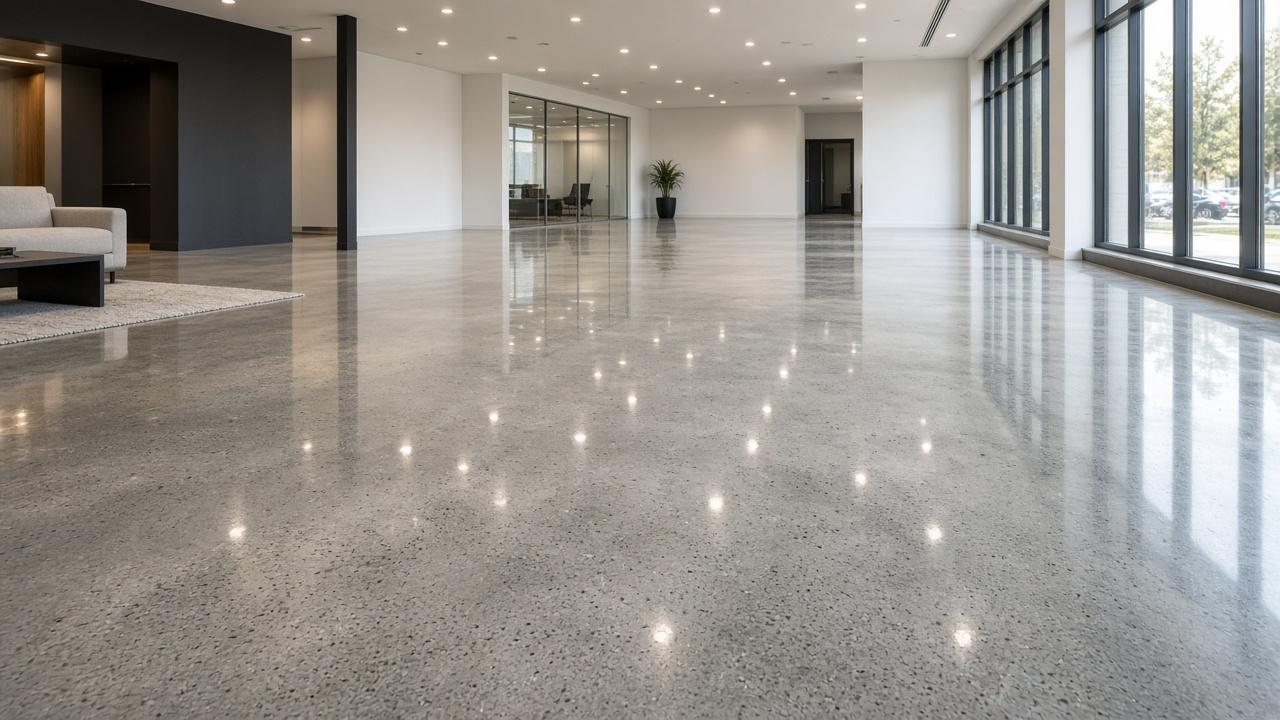
Concrete Sealing & Polishing Kelowna
Densify, seal, and polish existing concrete to a high-gloss or satin finish. An economical alternative to full epoxy that still dramatically improves durability and appearance.
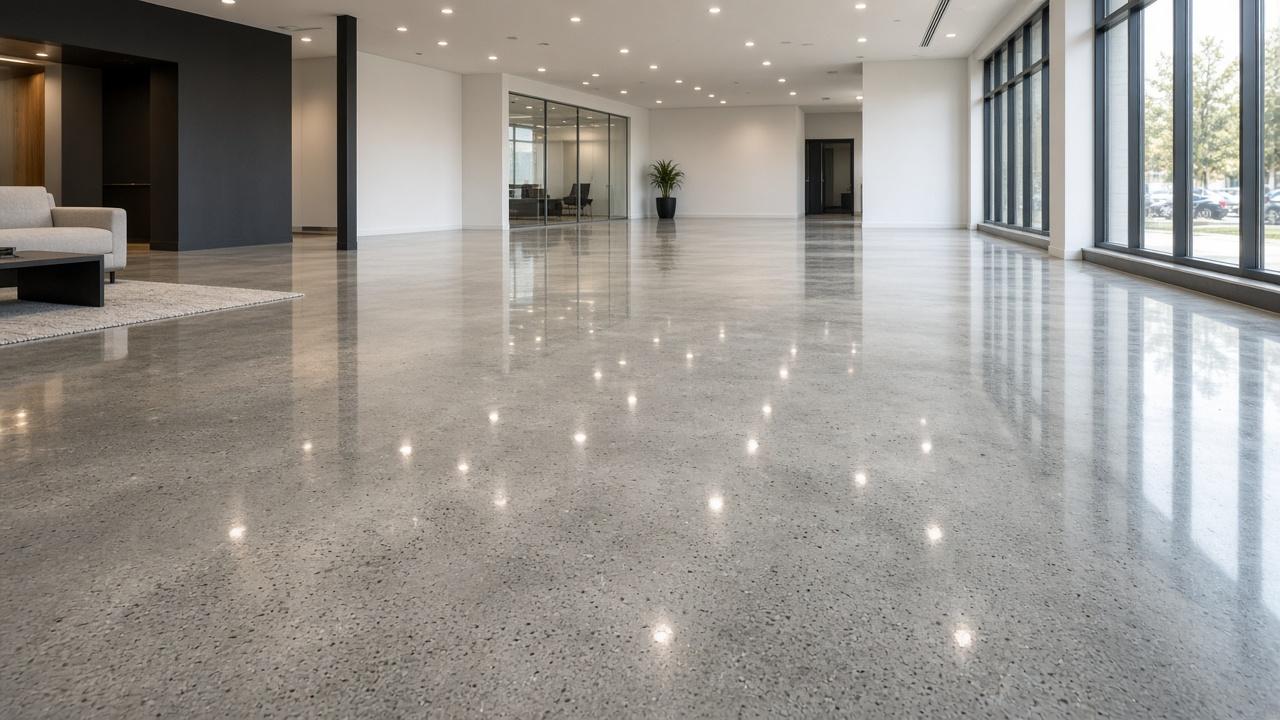
(236) 301-8111Concrete sealing and polishing offers a different approach to concrete floor improvement — one that works with the existing concrete rather than covering it with a separate coating. Sealed and polished concrete densifies and strengthens the surface of the slab itself, then seals it to resist staining and moisture. The result is a clean, durable, low-maintenance floor that showcases the concrete's natural aggregate and character rather than hiding it.
Ready to get started?
Free on-site quote — no pressure, no obligation.
Concrete Densification: The Foundation of Polished Concrete
Polished concrete isn't just grinding and polishing — it starts with chemical densification. Concrete densifiers (typically silicate-based compounds) are applied to the concrete surface and react with the calcium hydroxide in the cement paste to form additional calcium silicate hydrate (CSH) — the same compound that gives concrete its strength.
The result is a denser, harder surface that takes a better polish, resists abrasion more effectively, and is less porous (meaning it absorbs less contamination). Densification is what separates a properly polished concrete floor from a concrete floor that was simply ground with finer diamond tooling. The chemical reaction happens within the top 1/16" to 1/8" of the slab, strengthening the material rather than coating over it.
The Polishing Process: From Coarse to Mirror
Mechanically polished concrete uses a sequence of progressively finer diamond-tooling steps to achieve the desired gloss level:
**Course Grinding (30–50 grit):** Removes existing coatings, adhesives, or surface imperfections. Opens the slab for densification.
**Medium Grinding (100–200 grit):** Flattens and smooths the surface. Aggregate starts to become visible at this stage.
**Densifier Application:** Applied between medium and fine grinding steps to harden the surface for the polishing phase.
**Fine Grinding/Polishing (400–800 grit):** The surface begins to develop reflectivity. Most of the aggregate is now visible and the floor looks distinctly polished.
**Fine Polishing (1500–3000 grit):** Produces a high-gloss mirror finish. This is the cream-polish level that requires consistent, hard concrete to achieve — softer or very porous concrete achieves a lower maximum gloss.
**Sealer Application:** Penetrating or topical sealer applied to close remaining surface pores and provide stain resistance.
Sealing Options: Penetrating vs. Topical
Concrete sealing and polished concrete use different sealer types depending on the desired outcome:
**Penetrating Sealers (Silanes, Siloxanes, Silicates):** Absorb into the concrete and react with the substrate. They don't change the appearance significantly — the floor looks like sealed concrete, not like it has a coating on top. Excellent moisture protection, stain resistance, and durability because there's no film layer to peel or wear through.
**Topical Sealers (Acrylics, Polyurethanes, Epoxy Clear):** Form a protective film on the surface. They enhance gloss and colour significantly, making the concrete look 'wet' or more saturated. They wear down over time and need periodic reapplication — typically every 2–5 years depending on traffic.
**Densifier + Penetrating Guard:** The preferred system for polished concrete. The densifier strengthens the slab; the penetrating guard seals it without adding a film layer. The floor is easy to clean, stain-resistant, and requires no topical reapplication.
When Sealed or Polished Concrete Makes Sense
Sealed and polished concrete makes the most sense when:
**The concrete itself is interesting:** If the slab has a nice aggregate reveal, interesting colour, or character, polishing showcases it rather than covering it.
**Cost is a priority:** Polished concrete is typically less expensive than epoxy coating systems for large commercial floors. It has no film layer to maintain or recoat.
**Long-term durability is the priority:** A properly polished and densified concrete floor with penetrating sealer has almost no finite lifespan — unlike a coated floor that eventually needs topcoat renewal.
**The environment is harsh:** Densified concrete resists dusting, surface abrasion, and heavy traffic in ways that concrete without densification cannot.
**The aesthetic calls for it:** For some spaces — modern, industrial-aesthetic offices, restaurants with a raw material design direction, retail environments — polished concrete fits the look better than any coating.
Limitations of Concrete Sealing vs. Epoxy
Sealed and polished concrete isn't the right choice for every situation:
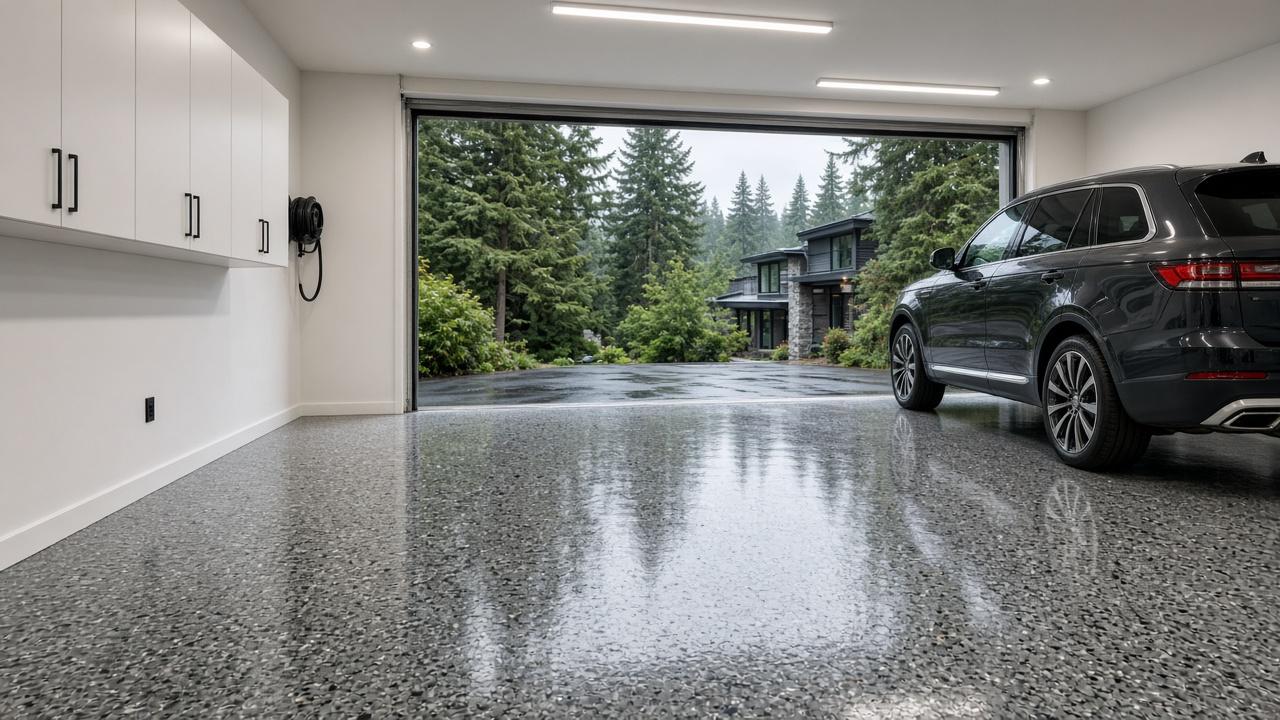
**Chemical resistance:** Polished concrete with penetrating sealer has moderate chemical resistance — better than bare concrete, worse than 100% solids epoxy. For spaces with regular oil, fuel, or chemical exposure (garages, auto shops), epoxy is a better choice.
**Coverage of defects:** Polishing doesn't hide concrete problems — it reveals them. A slab with heavy spalling, old adhesive residue, or significant surface variation will need substantial prep and may not be suitable for polished finish.
**Slip resistance:** Highly polished concrete (1500+ grit) can be slippery when wet. Anti-slip sealers or keeping the gloss level moderate (800 grit) addresses this in wet environments.
Concrete Sealing — Common Questions
How often does sealed concrete need to be resealed?+
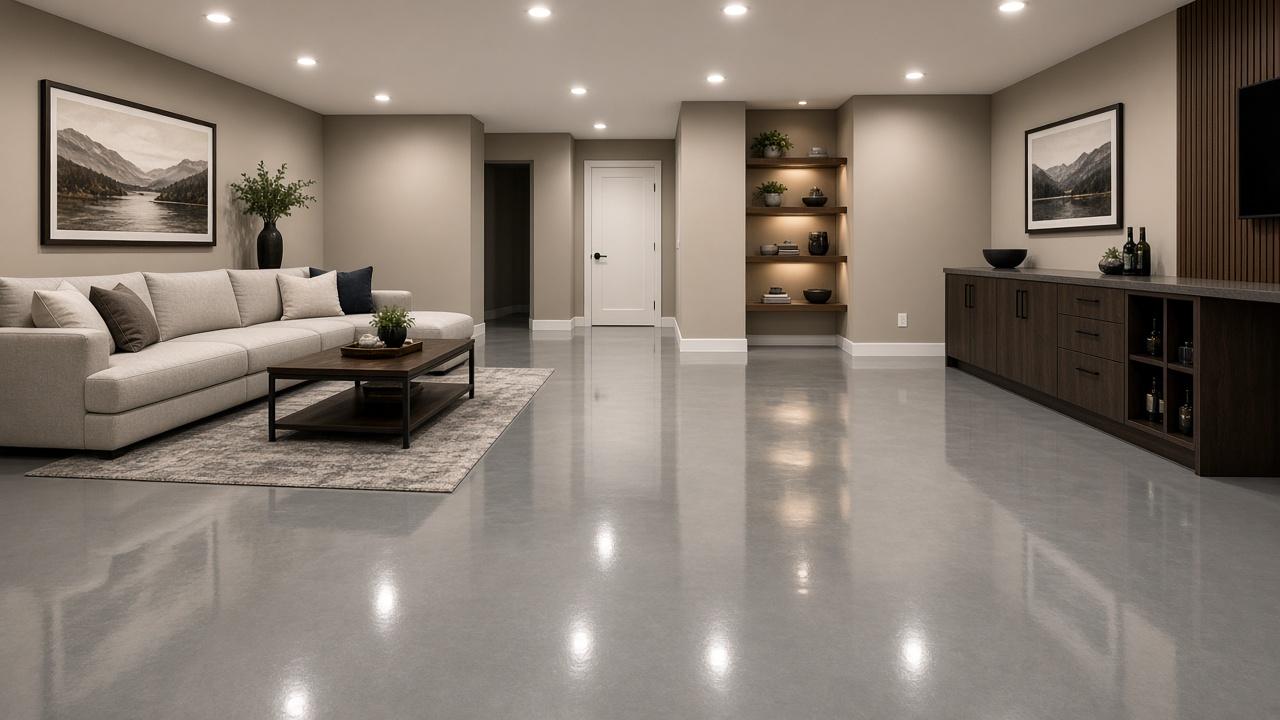
Can you polish a basement concrete floor?+
What's the difference between sealed and polished concrete?+
More Epoxy Flooring Services in Kelowna
Ready for a Floor That Actually Impresses?
Get a free, no-pressure quote for your Kelowna property. We measure, assess the slab, and give you a straight answer.