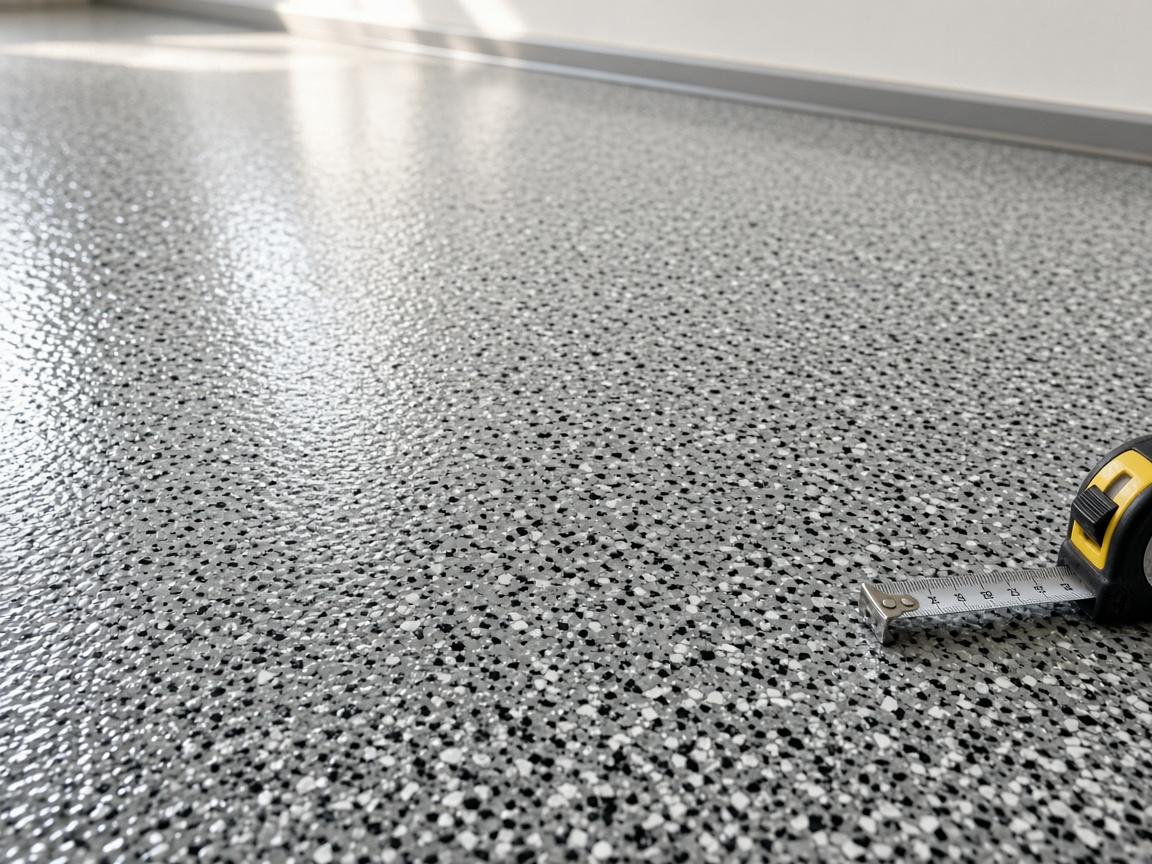
Epoxy Floor Coating Kelowna
Professional-grade epoxy floor coatings applied over existing concrete slabs. Chip, solid-colour, and broadcast systems for every budget and aesthetic.
(236) 301-8111Epoxy floor coating is the broad category that covers most of what people think of when they imagine a coated concrete floor — a durable, chemical-resistant, cleanable surface created by applying one or more coats of two-part epoxy resin directly to properly prepared concrete. It's used in garages, basements, commercial spaces, and industrial facilities because it fundamentally changes the performance and appearance of a concrete slab without the cost of replacing or covering it.
Ready to get started?
Free on-site quote — no pressure, no obligation.
Understanding Epoxy: What It Is and Why It Works
Epoxy is a thermosetting polymer created by mixing two components — Part A (the epoxy resin) and Part B (the hardener or curing agent). When combined, they undergo a chemical reaction that cross-links the molecules into a dense, rigid matrix. Once fully cured, epoxy is chemically bonded to the concrete substrate and resistant to oils, solvents, mild acids, abrasion, and impact.
The strength of an epoxy coating comes from this cross-linking density — higher-quality, higher-solids formulations create denser networks with better chemical and abrasion resistance. This is why 100% solids epoxy (no solvents, no water — just resin and hardener) outperforms the water-based epoxy found in box-store paint cans. The box-store products are typically 30–50% solids; the rest evaporates as the coating cures. What you're left with is a very thin film that can't develop the mechanical properties of a commercial-grade system.
Epoxy Floor Coating Systems: Single Coat vs. Multi-Coat
A single-coat epoxy floor coating applied over bare concrete is the most basic system — and honestly, not what we recommend for most applications in Kelowna. A single thin coat provides minimal protection, telegraphs surface imperfections, and wears through relatively quickly.
The multi-coat system we use on most jobs works as follows:
**Primer / Penetrating Coat:** A low-viscosity epoxy that soaks into the opened concrete profile (created by diamond grinding) and creates a strong mechanical bond. This is the foundation everything else depends on.
**Body Coat:** The main epoxy layer — coloured, clear, or aggregate-filled depending on the system. Applied at the correct mil thickness (typically 10–20 mils for residential and light commercial).
**Topcoat:** A polyaspartic or urethane topcoat seals the system, adds UV stability, and provides the final surface hardness, sheen level, and chemical resistance.
This three-layer approach creates a coating system that's significantly more durable and longer-lasting than any single-coat application.
Choosing the Right Epoxy Coating for Your Kelowna Space
The right coating depends on how the space is used, how it looks now, and what you want from it:
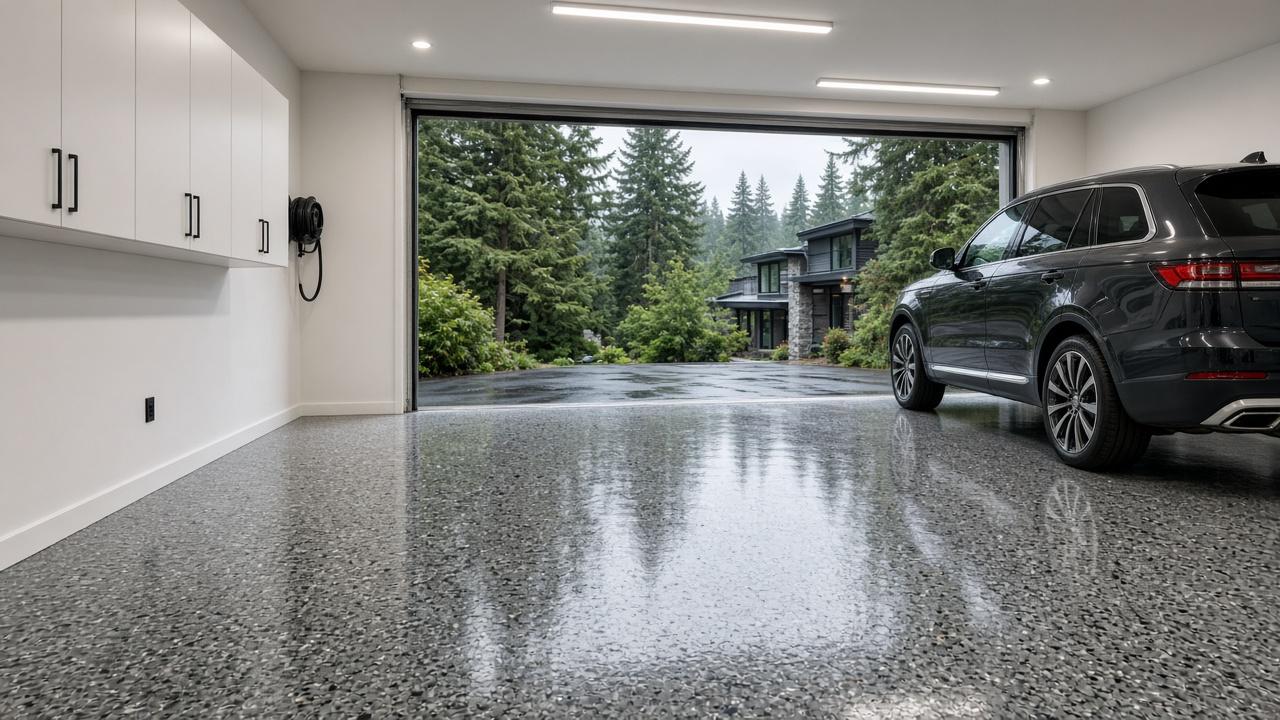
**Garage:** Full-broadcast flake with polyaspartic topcoat is the gold standard. Chemical resistant, non-slip, durable, easy to clean.
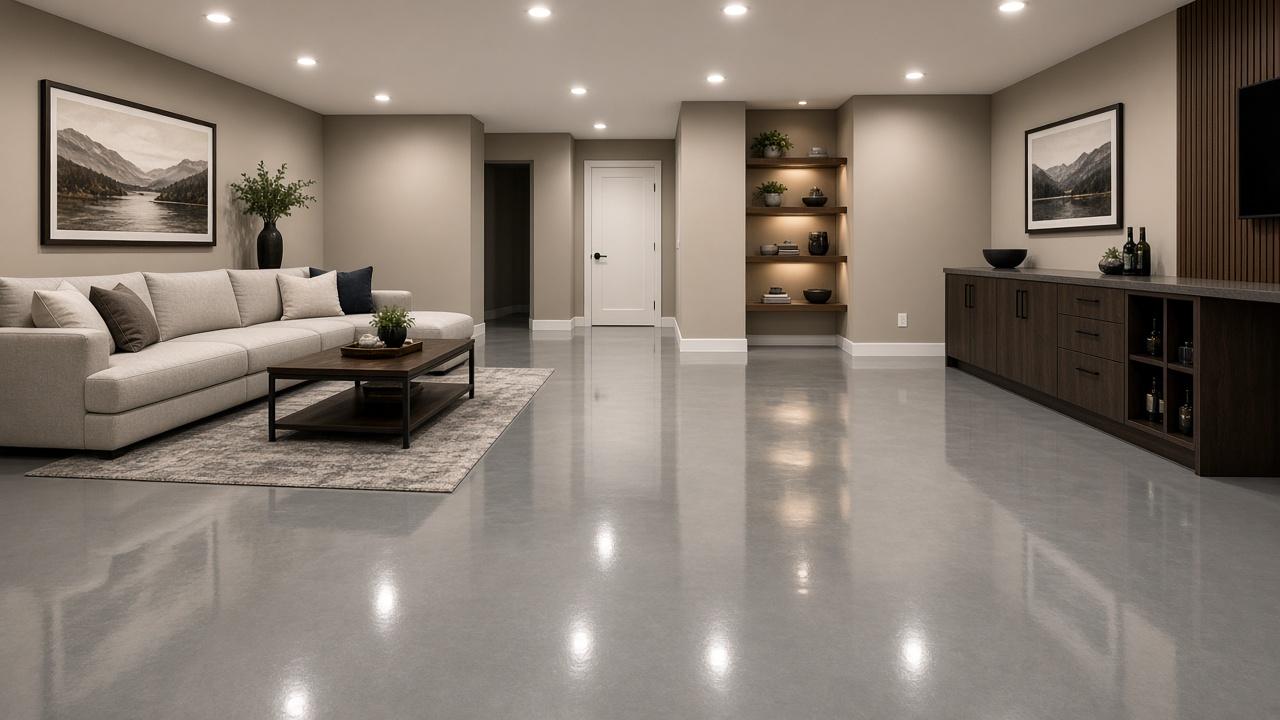
**Basement Rec Room or Gym:** Solid colour or flake depending on desired aesthetic. Anti-slip aggregate in the topcoat for safety if the space is heavily used.
**Commercial Retail:** High-gloss clear or solid colour system for a professional presentation surface. Polyaspartic for UV stability.
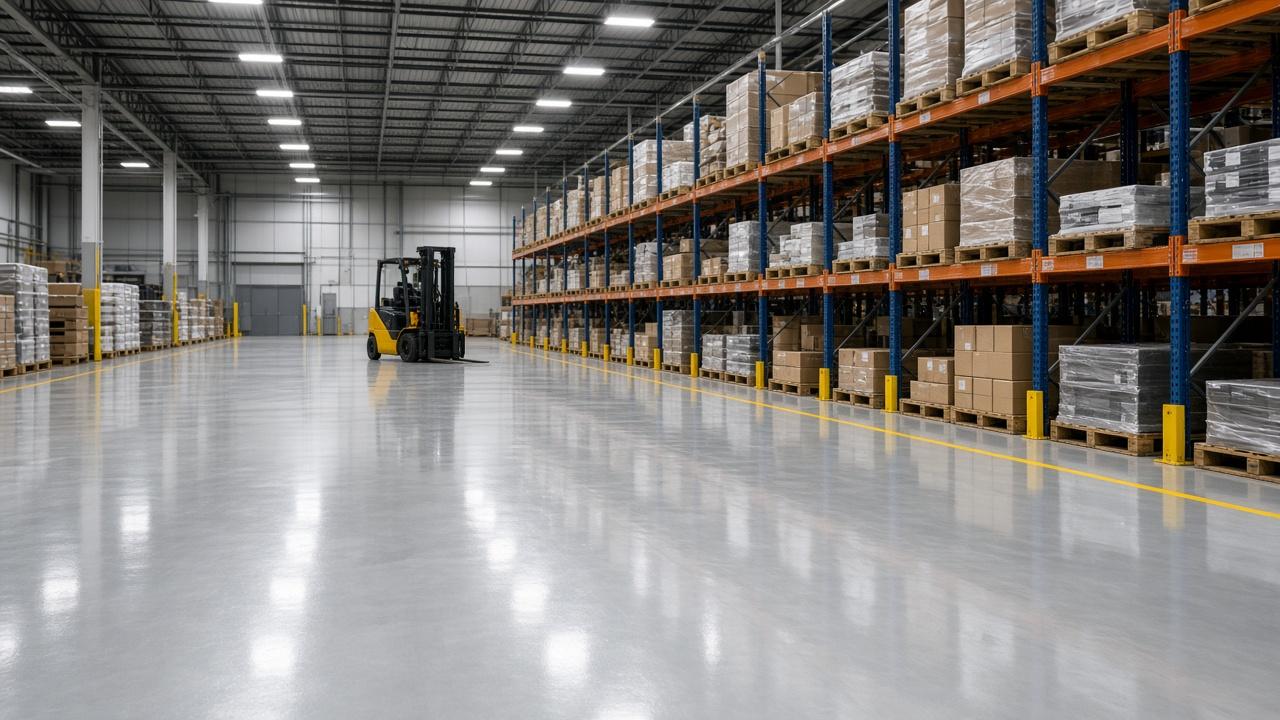
**Light Industrial:** Thick-build 100% solids epoxy, possibly with aggregate broadcast, for forklift and heavy-equipment compatibility.
**High Chemical Exposure:** Chemical-resistant epoxy formulations or novolac epoxy for severe acid or solvent environments.
Surface Prep: Where Every Good Coating Begins
We'll say this as many times as it takes: surface preparation determines 80% of the outcome. An expensive coating applied over unprepared concrete will fail. A standard coating applied over properly diamond-ground, clean, profiled concrete will outlast the building.
Our prep sequence: 1. Remove all existing coatings, adhesives, or sealers down to bare concrete 2. Diamond grind to CSP 2 or 3 (depending on coating thickness) 3. Repair cracks, spalling, and joints 4. Clean all dust with industrial vacuum 5. Test for moisture (ASTM F2170) 6. Address any moisture issues before coating
Floor Coatings — Common Questions
What's the difference between epoxy paint and epoxy floor coating?+
How thick should an epoxy floor coating be?+
Can epoxy be applied over a previously coated floor?+
More Epoxy Flooring Services in Kelowna
Ready for a Floor That Actually Impresses?
Get a free, no-pressure quote for your Kelowna property. We measure, assess the slab, and give you a straight answer.